
You have booked a blood test for tomorrow morning, and now the questions begin. Can I drink tea? Should I skip my medicines? Is water allowed? Preparing the right way is one of the simplest things you can do to make sure your report is accurate. A small mistake, like a cup of sweet tea before a sugar test, can change your results and may lead to confusion, repeat tests and unnecessary worry.
At HealthyPathLab, we are often asked about fasting before blood tests. This guide explains what fasting means, which tests need it, which do not, and how to handle common situations.
What Does Fasting Mean?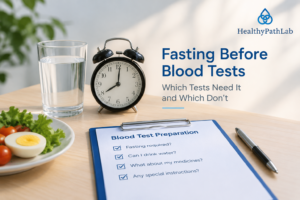
Fasting means not eating or drinking anything except plain water for a set number of hours before your sample is collected. Food and drinks release sugar, fats and other substances into your bloodstream. If these are present when blood is drawn, they can raise or lower certain test values and give a picture that does not reflect your usual health.
For most tests that need fasting, the recommended period is 8 to 12 hours. Many people find it easiest to have an early dinner, go to bed, and visit the lab the next morning without eating breakfast.
Fasting Before Blood Tests: Which Tests Need It and Which Don’t
Tests That Usually Require Fasting
1. Fasting Blood Sugar (FBS) This test measures the sugar level in your blood after at least 8 hours without food. It is commonly used to screen for diabetes and prediabetes. Eating before the test can push your sugar level up and give a misleading result.
2. Lipid Profile This test measures total cholesterol, LDL, HDL and triglycerides. Triglycerides in particular rise after meals, so a fasting sample of 9 to 12 hours gives the most reliable reading. Some doctors now accept non-fasting lipid tests for routine screening, but if your doctor has asked for a fasting sample, follow that advice.
3. Liver Function Test (LFT) and Kidney Function Test (KFT) These are often done as part of a health package, and many labs ask for fasting because a heavy meal can slightly affect some values. When they are part of a combined package with sugar or lipid tests, you will be fasting anyway.
4. Iron Studies Serum iron levels can rise after eating iron-rich food or taking iron supplements. A fasting morning sample gives a better picture of your iron status.
5. Glucose Tolerance Test (GTT) This test, often used to check for gestational diabetes in pregnancy, requires an overnight fast followed by a sugar drink and repeat samples. Your doctor or the lab will give you exact instructions.
Tests That Usually Do Not Require Fasting
Many common tests can be done at any time of day without fasting:
* Complete Blood Count (CBC)
* Thyroid profile (TSH, T3, T4)
* Vitamin D
* Vitamin B12 (some labs prefer fasting, so check when booking)
* HbA1c, which reflects your average sugar over about three months
* Urine routine and microscopy
* Dengue, malaria and typhoid tests
* Most hormone tests, depending on your doctor’s advice
HbA1c is a good example. Because it reflects the past two to three months, a single meal does not change it. This makes it convenient for people who find fasting difficult.
Can I Drink Water While Fasting?
Yes, and you should. Plain water is allowed and even encouraged. Being well hydrated makes it easier for the phlebotomist to draw blood and reduces the chance of dizziness. What you should avoid is tea, coffee (even without sugar for some tests), juice, milk, soft drinks, chewing gum and cigarettes.
What About My Regular Medicines?
This is one of the most important questions. As a general rule:
* Do not stop prescribed medicines on your own, especially for blood pressure, heart conditions, thyroid or epilepsy.
* If you take diabetes medicines or insulin, speak to your doctor before the test. Taking them without eating can cause your sugar to drop too low.
* For thyroid tablets, many doctors advise taking them after the sample is drawn on the day of the test. Ask your doctor if unsure.
* Always tell the lab staff which medicines and supplements you take. Biotin supplements, popular for hair and nails, can interfere with some thyroid and hormone tests, so mention them.
What If I Accidentally Ate or Drank Something?
It happens to everyone. If you ate or drank something other than water before a fasting test:
1. Tell the lab staff honestly. They can note it on your sample, which helps your doctor interpret the result.
2. Reschedule if needed. For tests like fasting sugar and lipid profile, it is usually better to come back another day than to get a result that may be inaccurate.
3. Do not stress. A single missed instruction is not a health emergency.
Practical Tips for a Smooth Fasting Test
* Book a morning slot. Fasting is easier when most of it is spent sleeping.
* Keep your dinner light the night before. Very oily or sugary meals can affect fats and sugar readings.
* Avoid alcohol for at least 24 hours before a lipid or liver test.
* Avoid heavy exercise just before the test.
* Carry a snack to eat right after your sample is collected.
* Choose home collection if you feel weak or tired when fasting. At HealthyPathLab, our trained phlebotomists can visit your home in Pune so you can give your sample in comfort and have breakfast right after.
Special Cases: Children, Seniors and Pregnant Women
Children should not fast as long as adults. Ask your paediatrician for exact timings, as even a few hours may be enough for young children.
Older adults and people with diabetes should avoid very long fasts. Schedule the test early in the morning so the gap between dinner and the sample is as short as the test allows.
Pregnant women should follow the specific instructions given by their gynaecologist, especially for glucose tolerance tests.
Frequently Asked Questions
Q1. How many hours should I fast for a blood sugar test? A minimum of 8 hours is required, and 10 to 12 hours is common. Do not fast beyond 14 to 16 hours, as it can also affect results.
Q2. Can I drink black coffee before a blood test? It is best to avoid it. Even without sugar, coffee can affect some tests. Stick to plain water.
Q3. Do I need to fast for a thyroid test? No, a thyroid profile does not normally require fasting. If it is part of a package that includes sugar or lipid tests, you will be fasting for those.
Q4. Can I brush my teeth before a fasting test? Yes. Brushing is fine as long as you do not swallow toothpaste.
Book Your Test with HealthyPathLab
Not sure whether your test needs fasting? Call or message HealthyPathLab when you book, and our team will give you clear preparation instructions for every test. You can also book home sample collection anywhere in Pune and get accurate, timely reports without the hassle of travel.
Disclaimer: This article is for general information and does not replace medical advice. Please consult your doctor for guidance about your health and medicines
Pingback: Full Body checkup